
Figures in Transition: The Fluid Art of Aaron Nemec
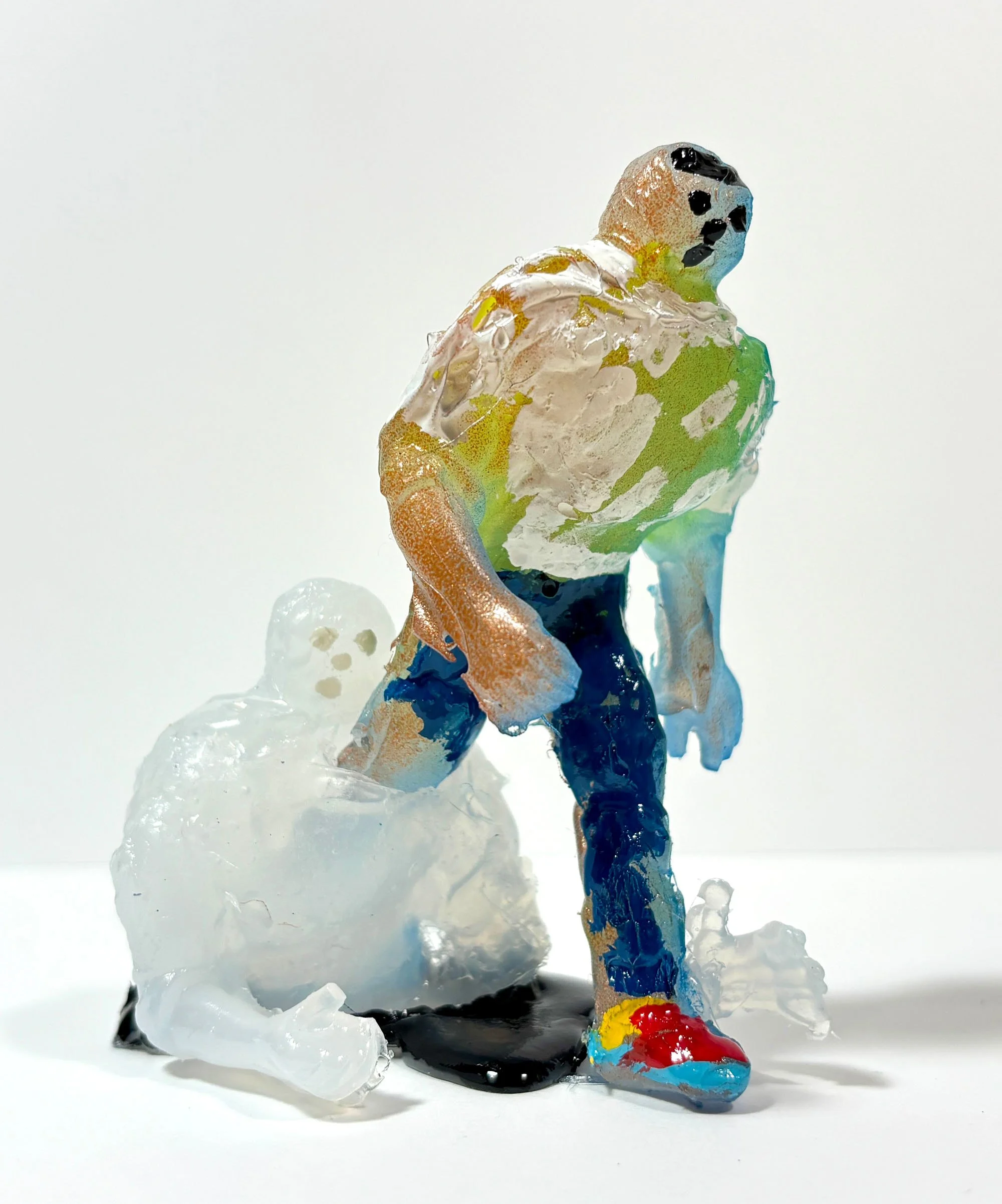
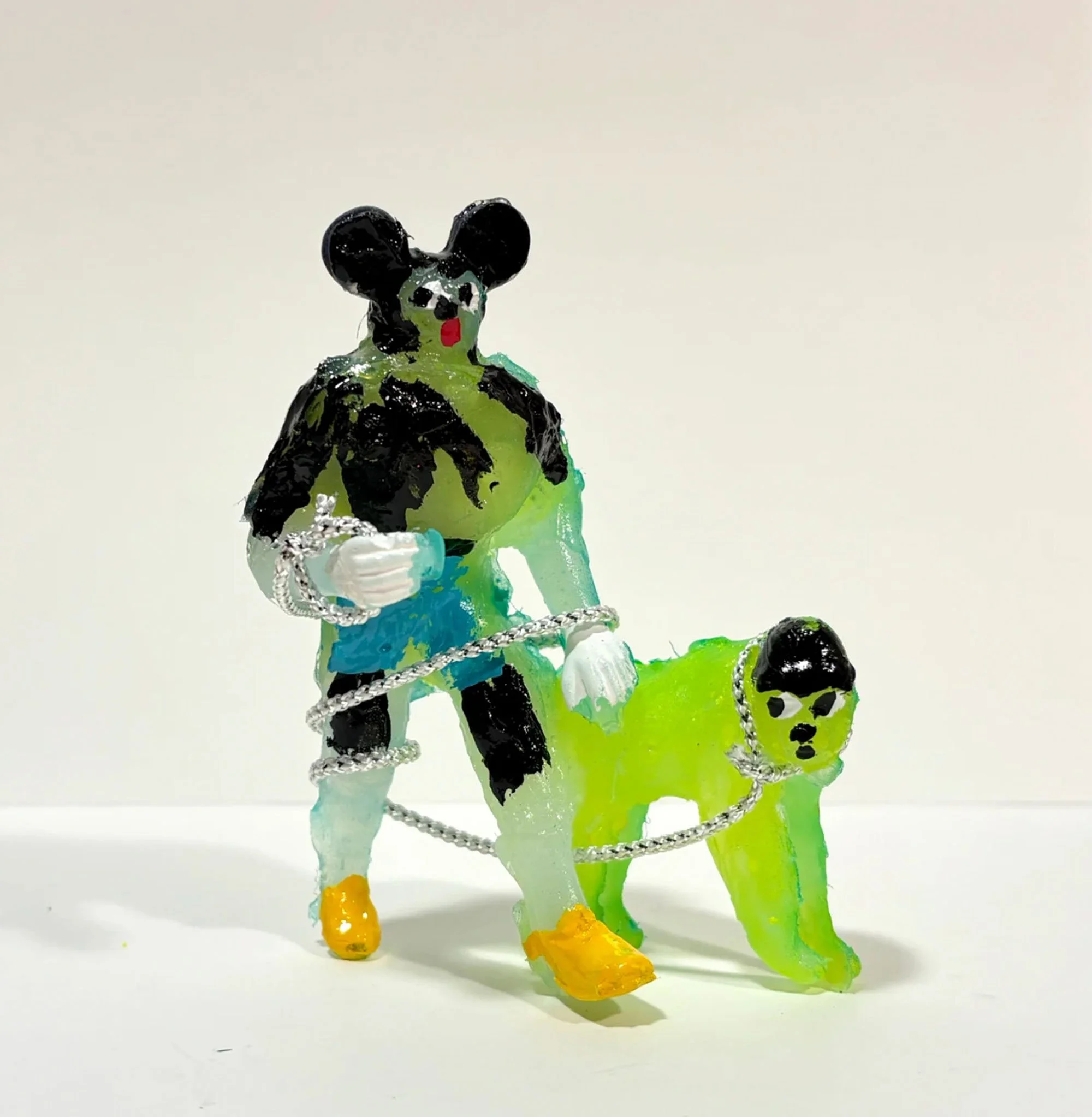
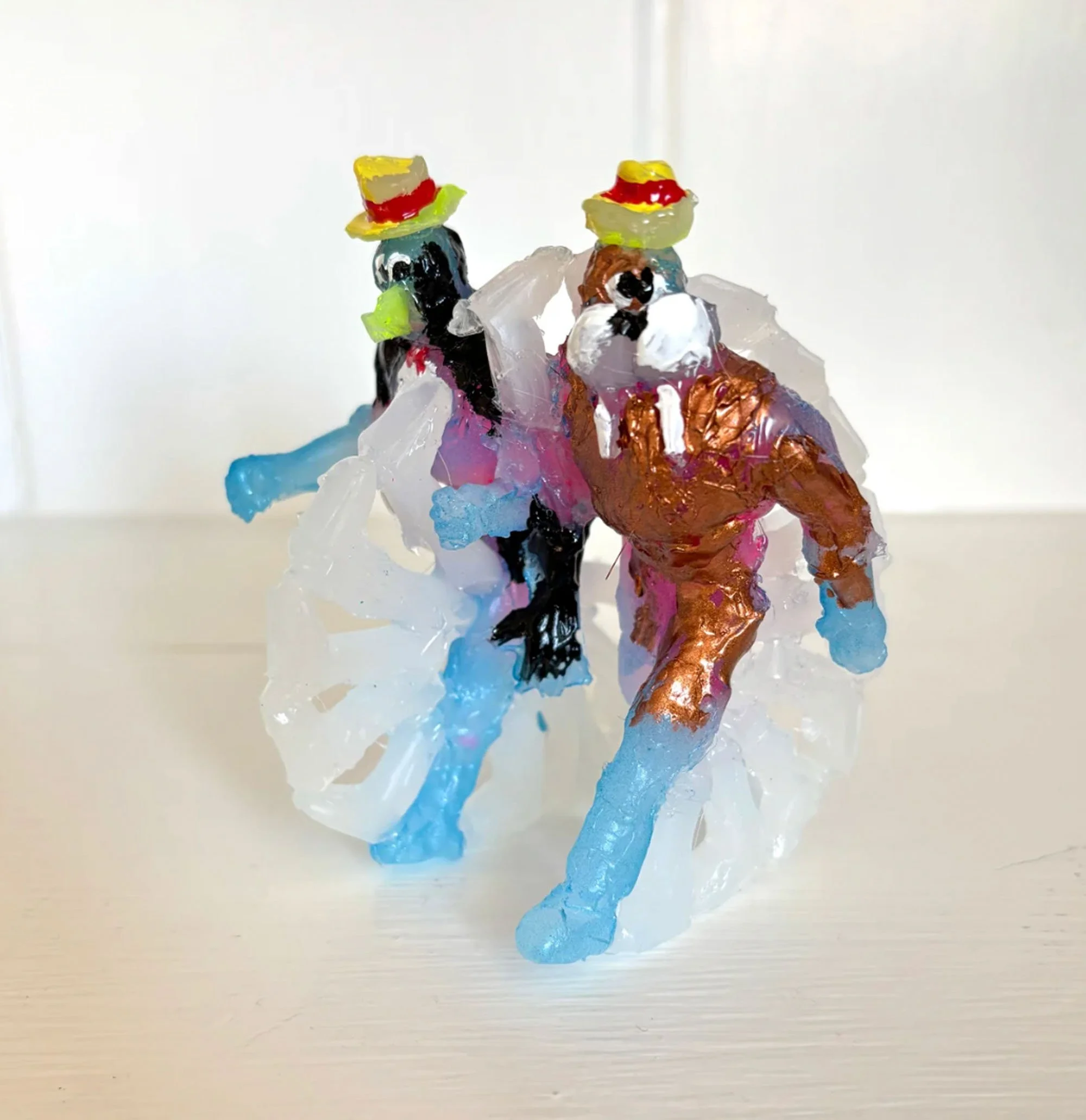
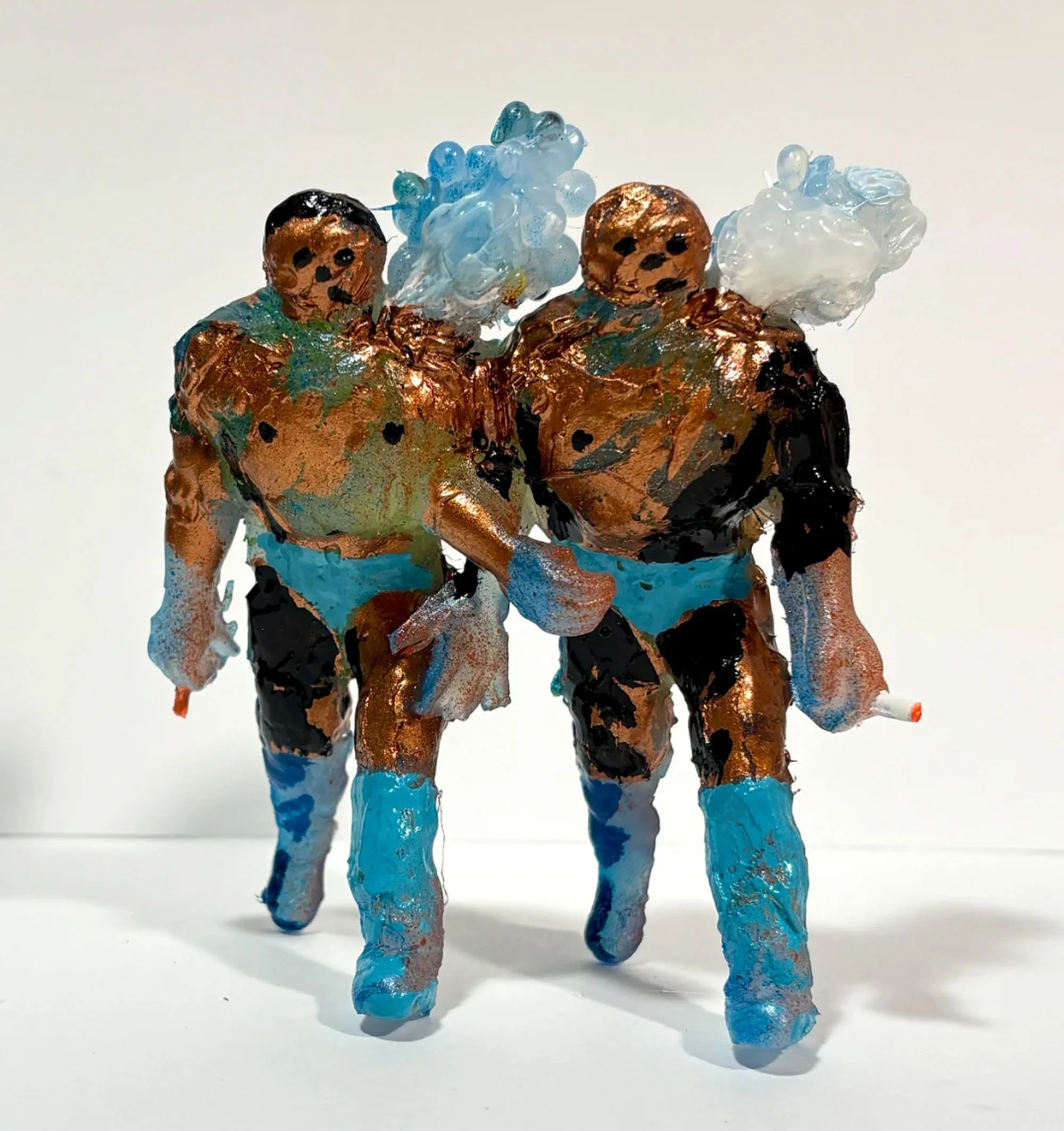
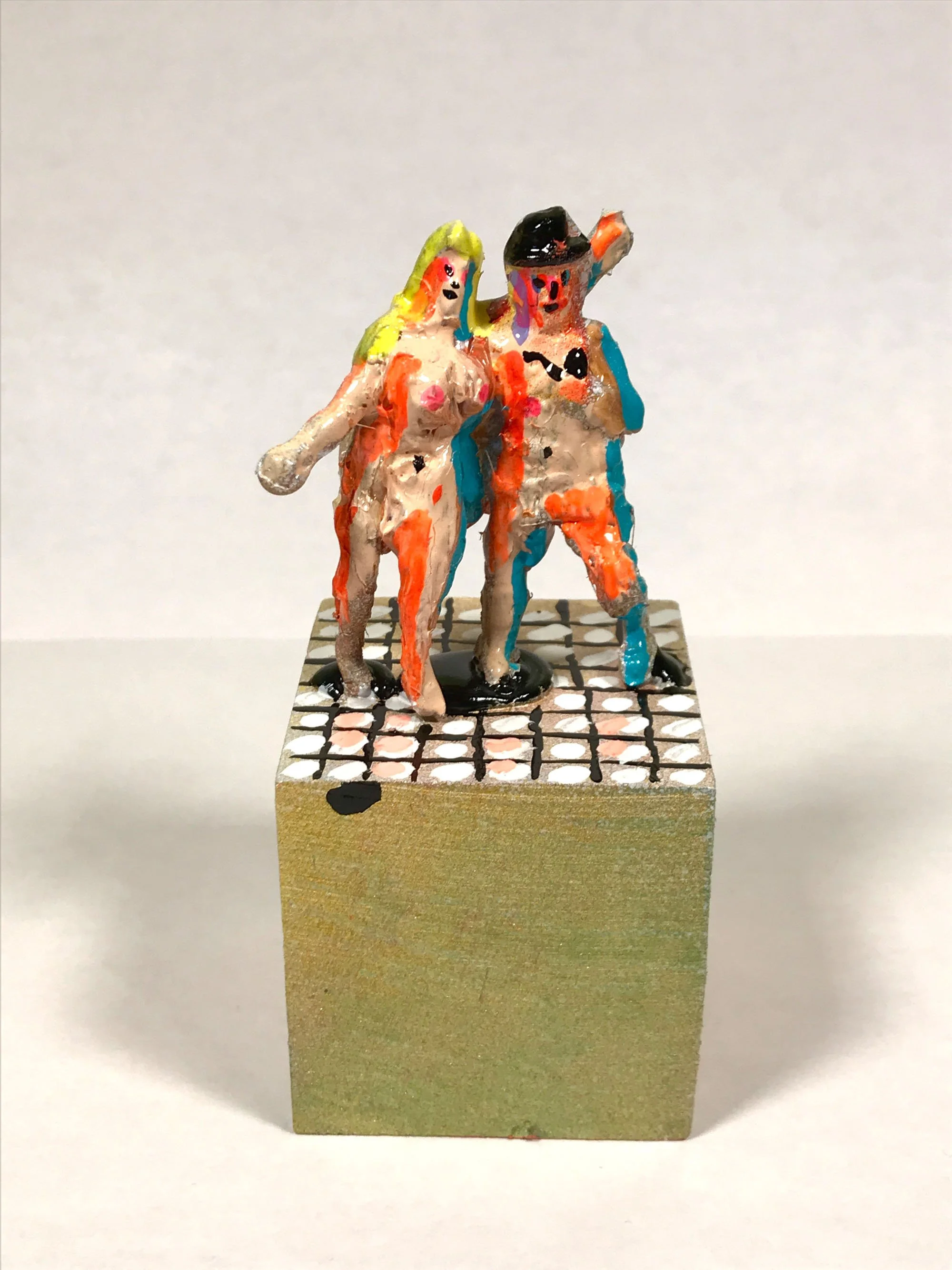
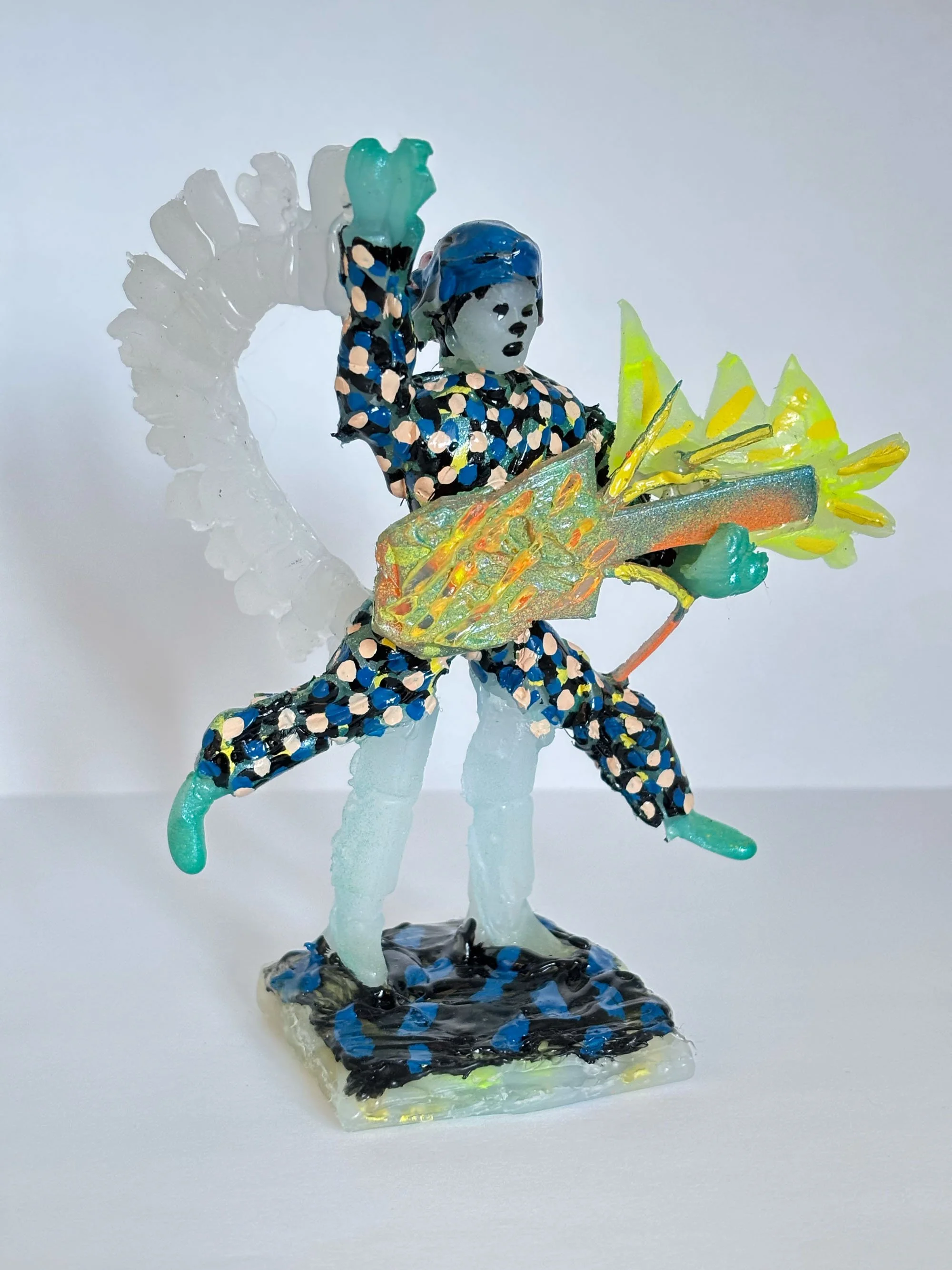
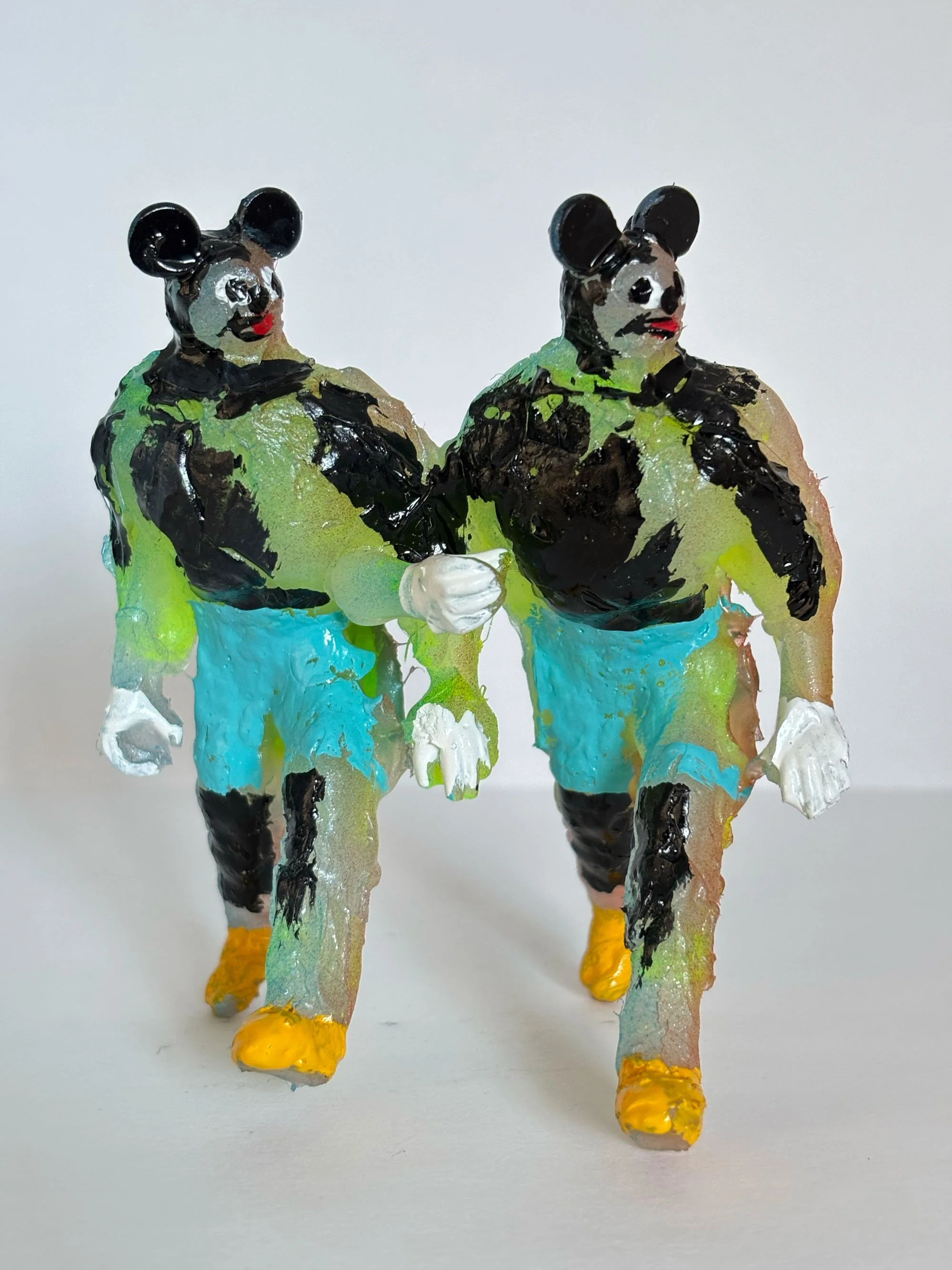
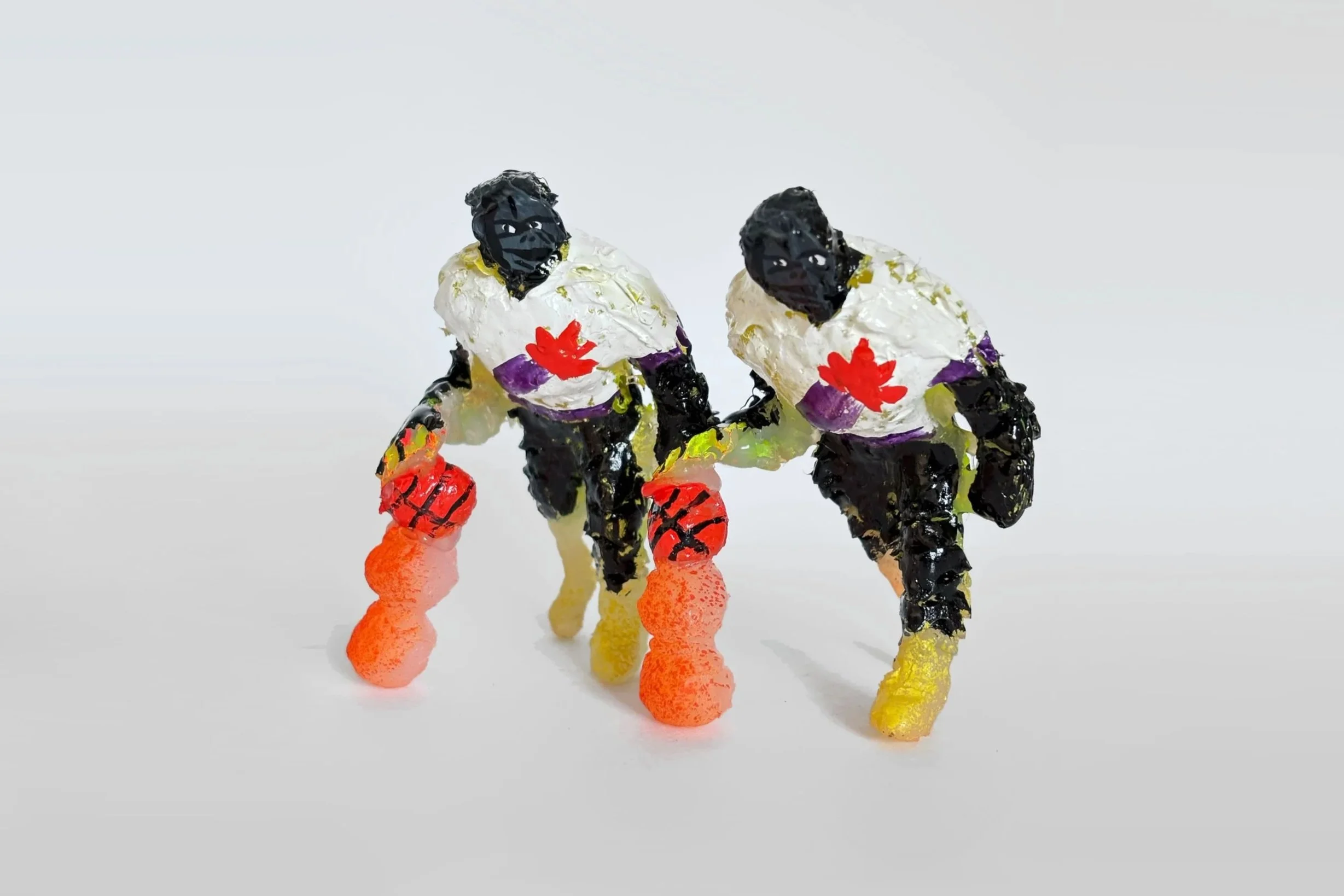
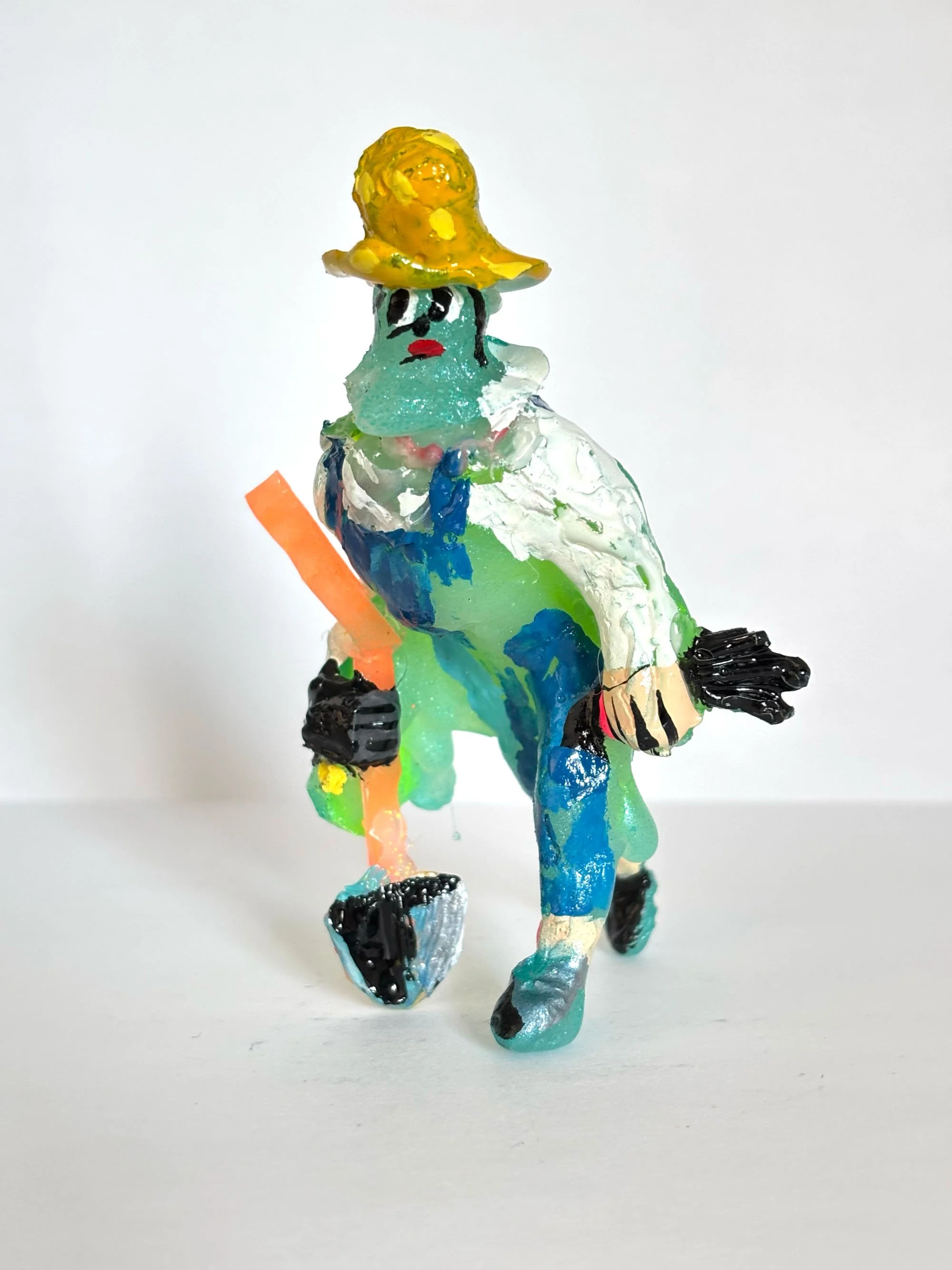
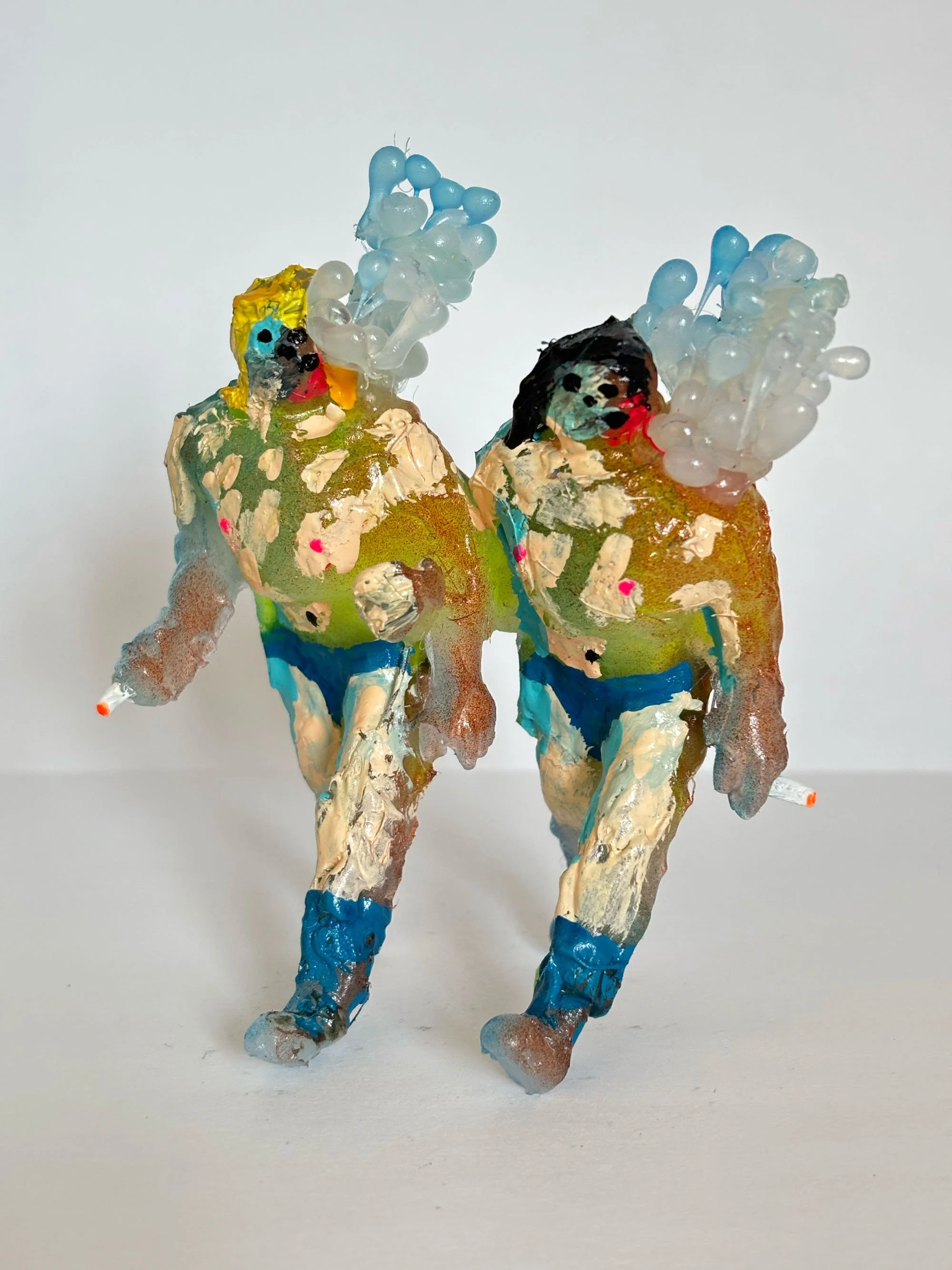
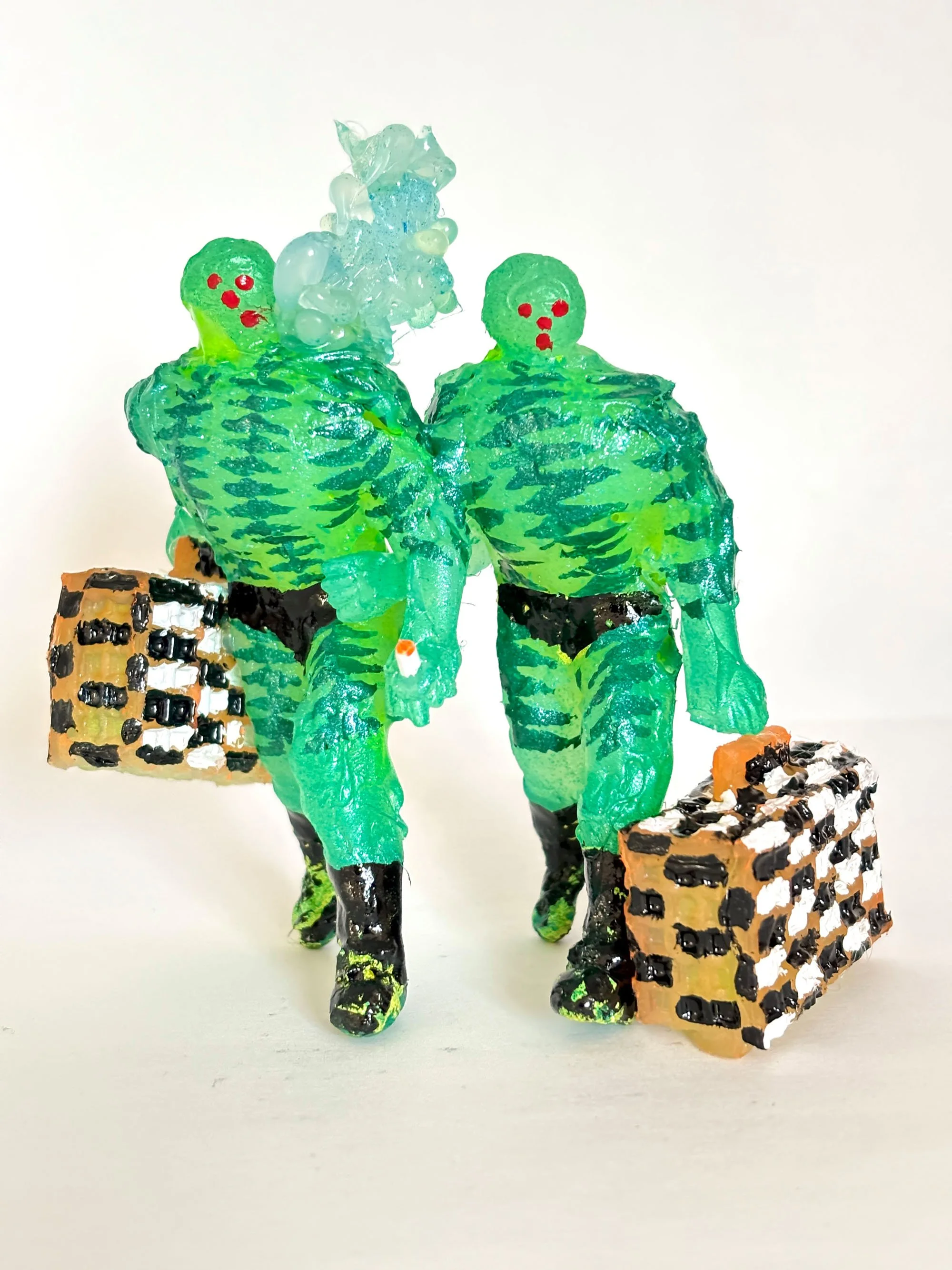
Aaron Nemec is an emerging artist whose work sits at the crossroads of Pop Art, the Lowbrow movement, and the world of Japanese Sofubi figurines. His practice is defined by a distinctive approach that is at once raw, narrative, and deeply sincere, exploring themes of mutation, childhood, and the passage toward another state of being.
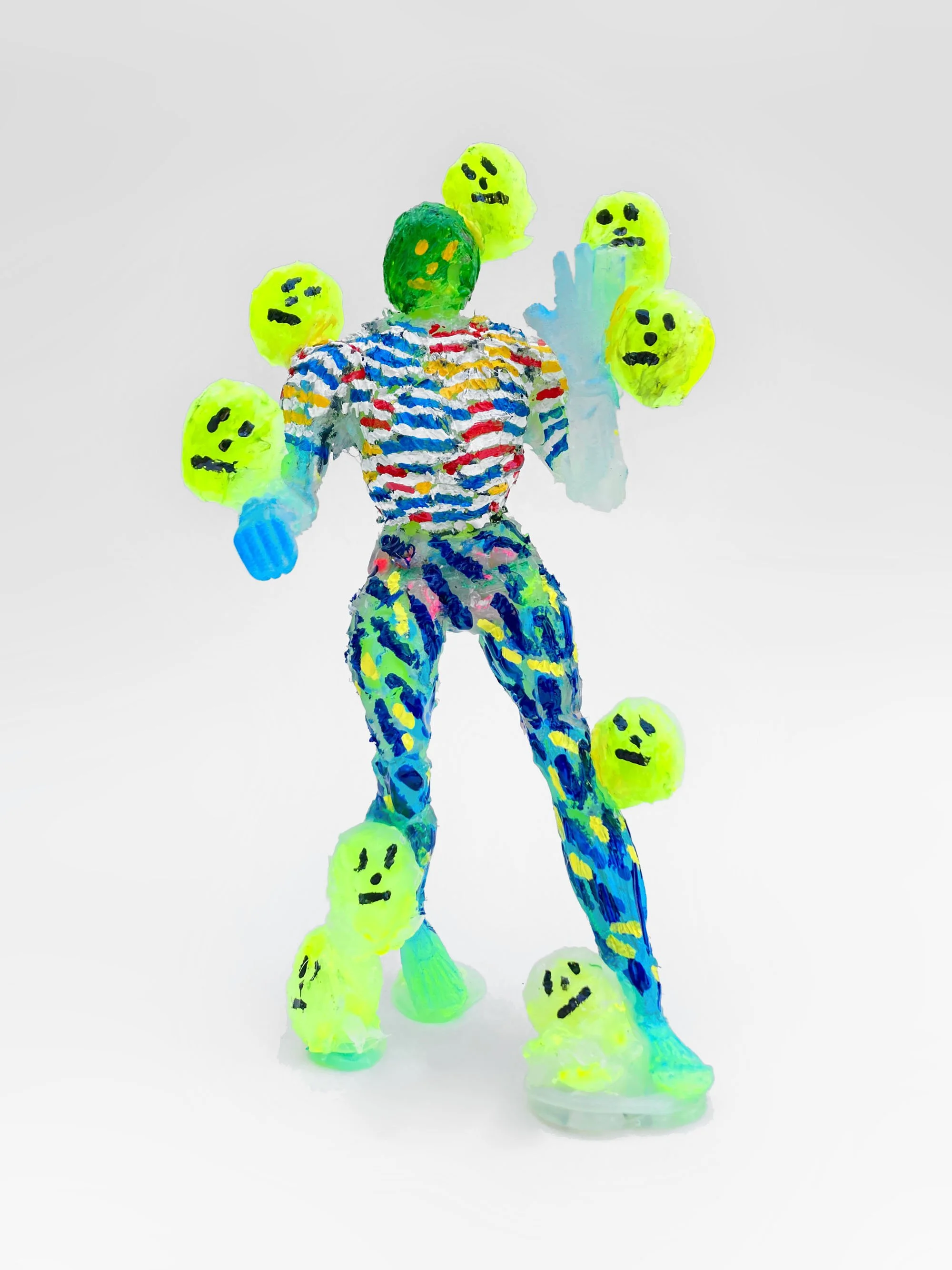
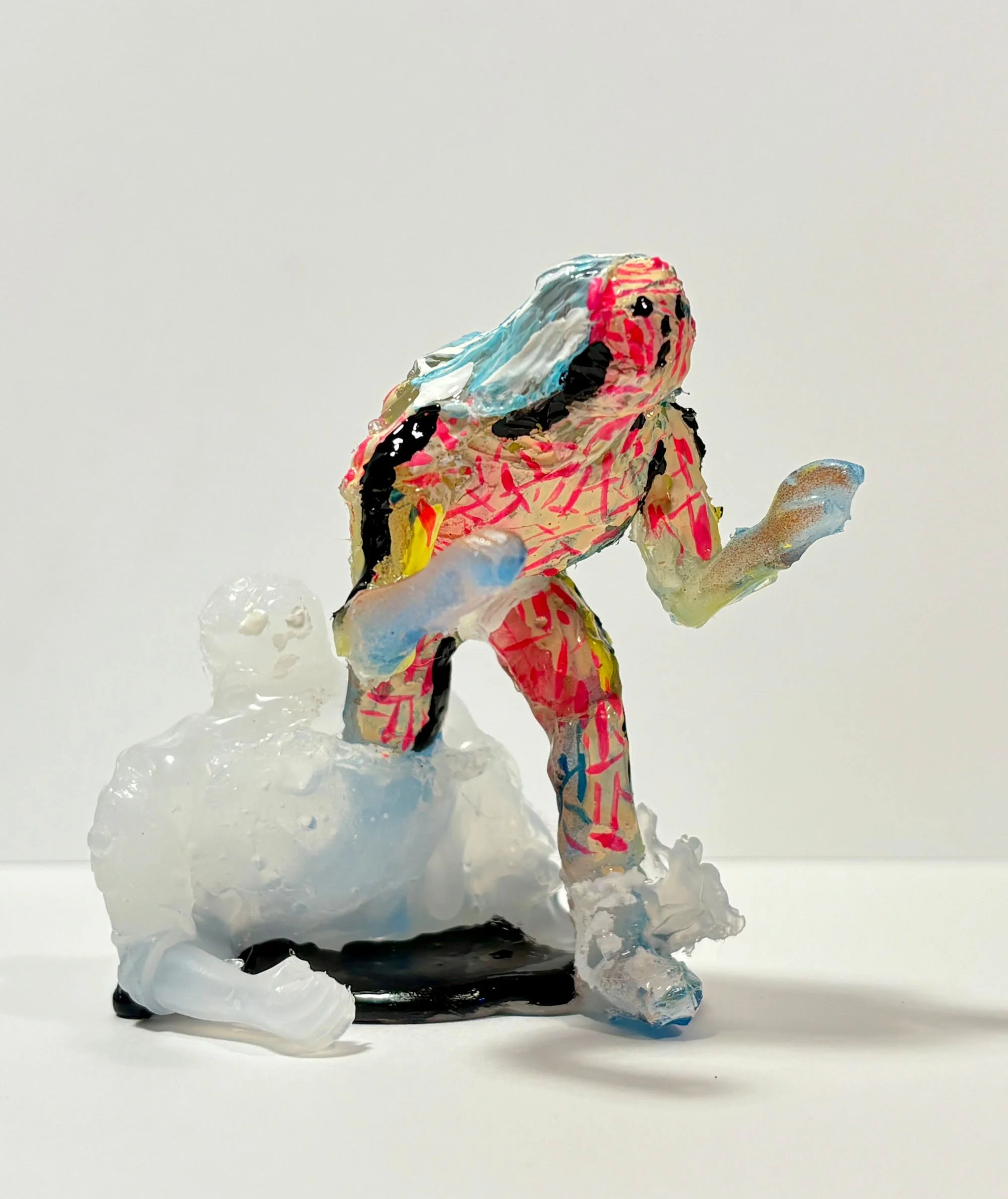
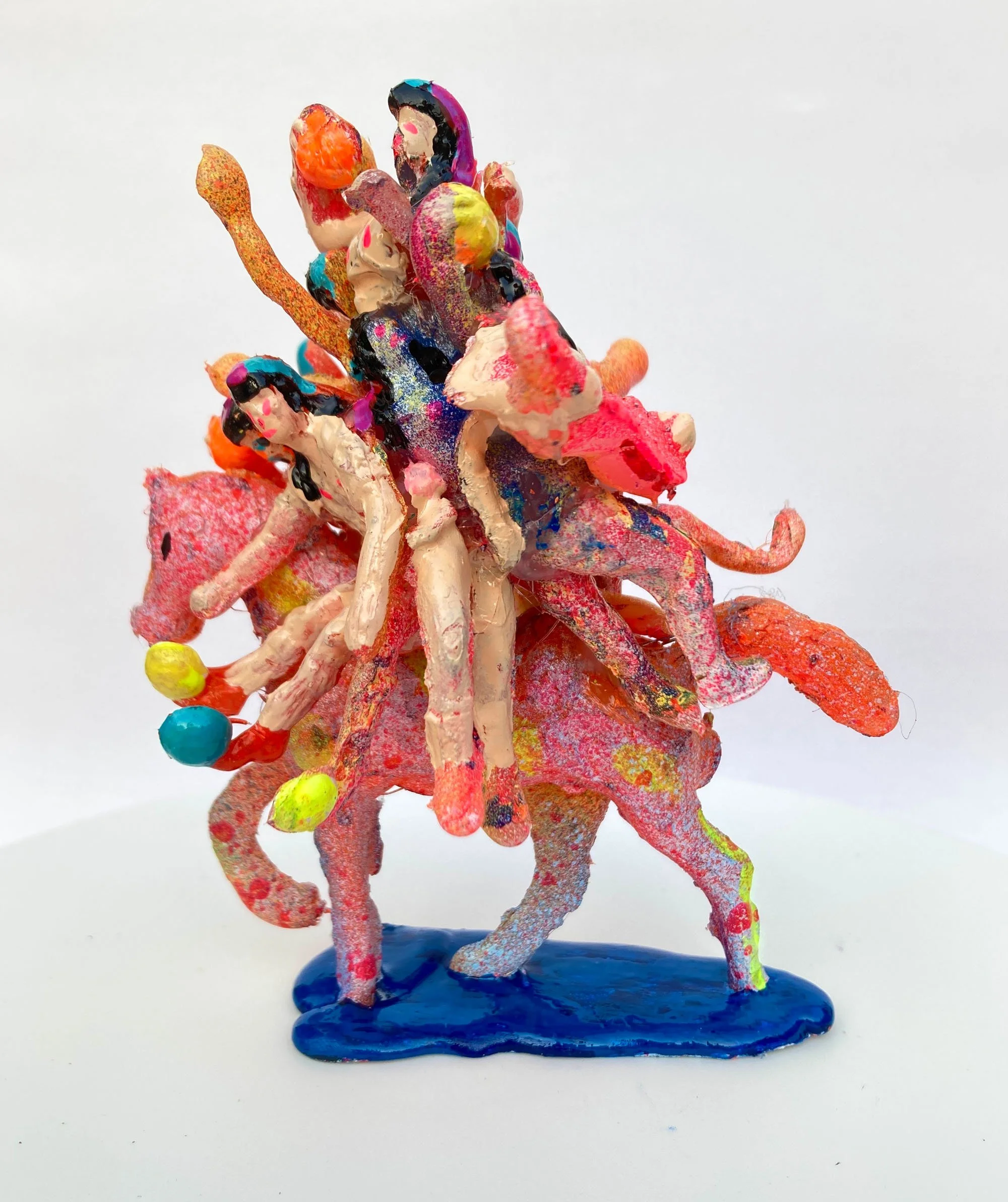
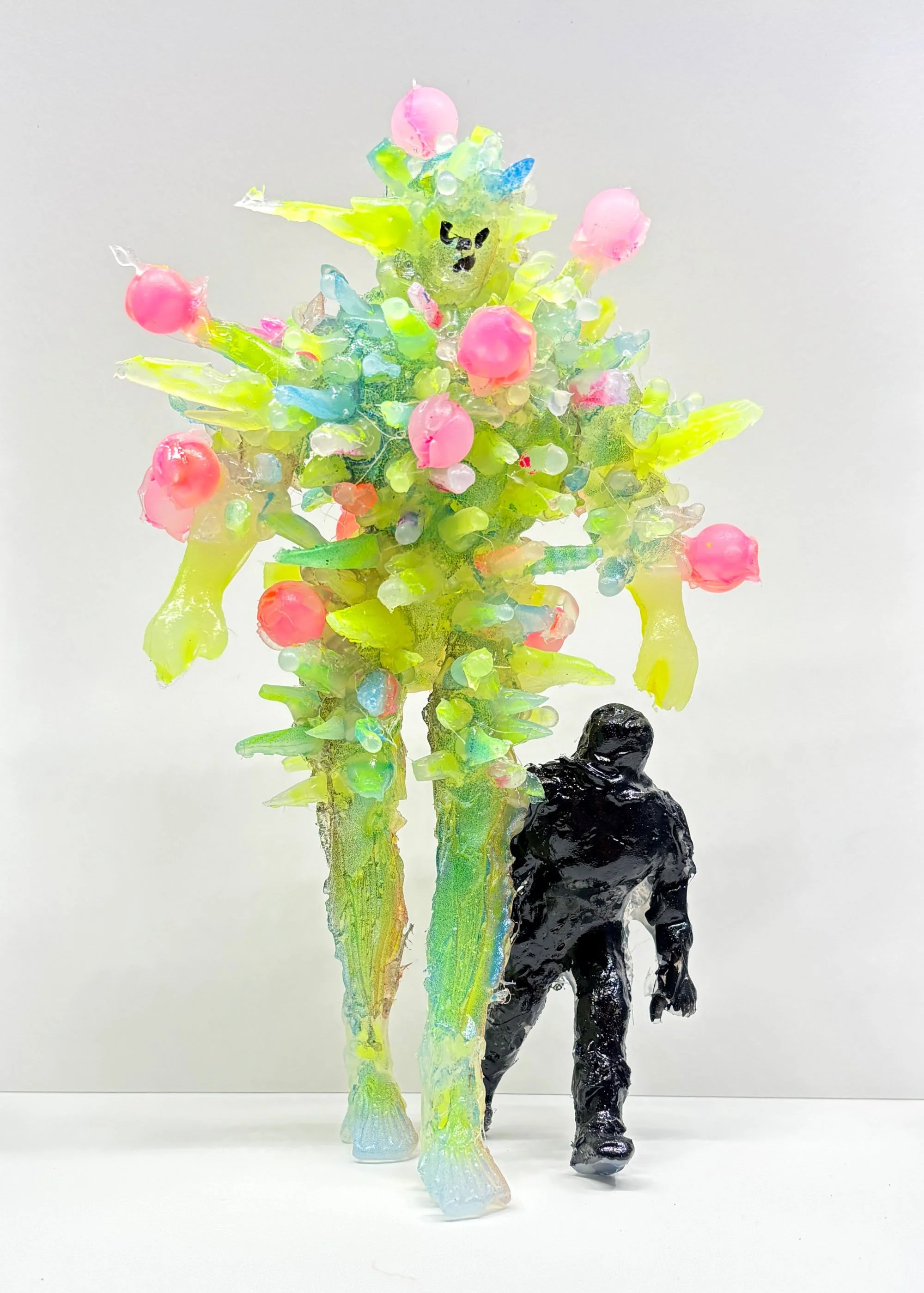
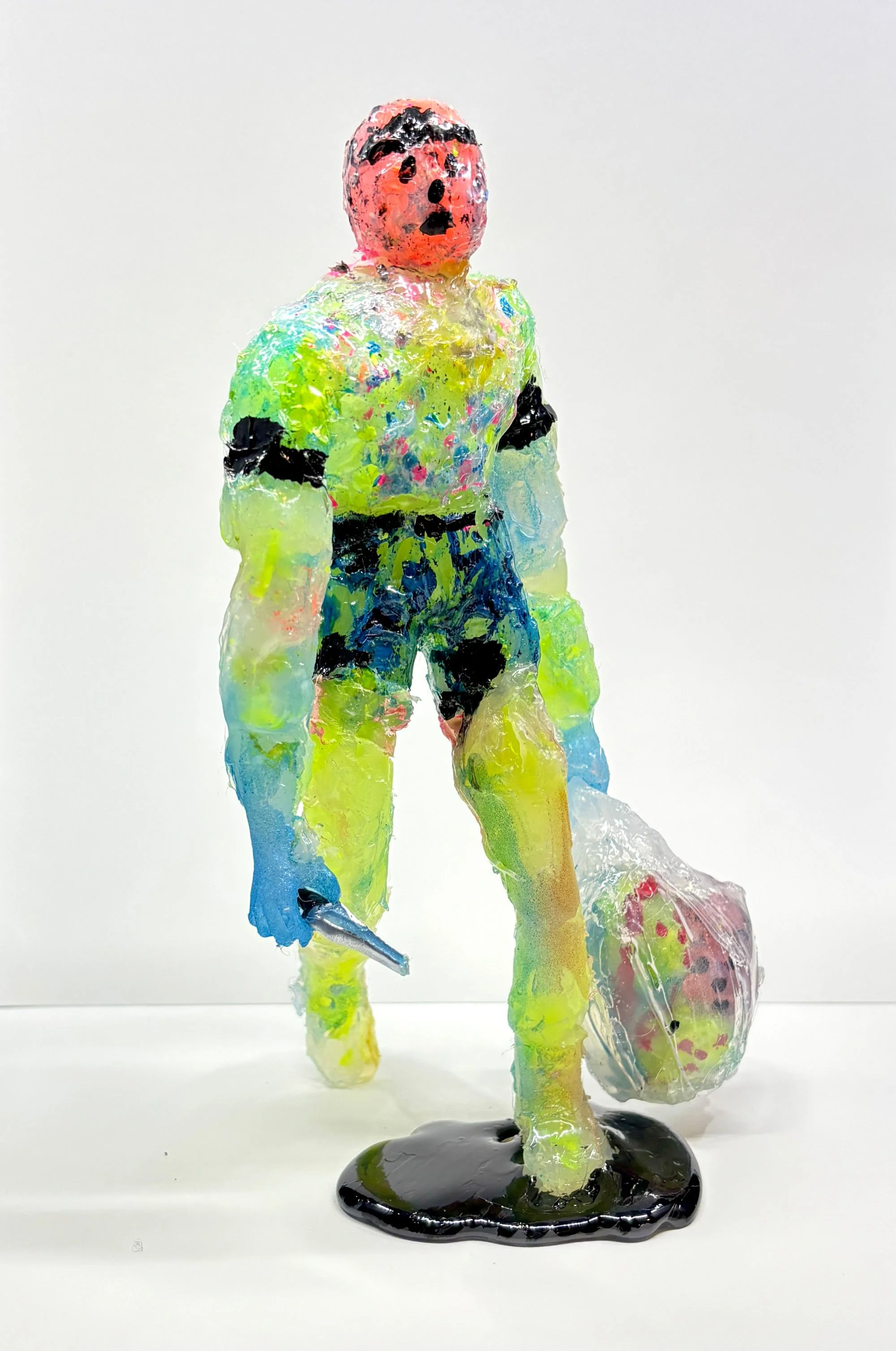
Through small-scale sculptures created using a non-conventional medium—hot glue, Aaron Nemec develops a promising, powerful, and instinctive aesthetic. The material, intentionally visible and imperfect, becomes a language in itself, conveying ideas of metamorphosis and continuous transformation.
His approach is both narrative and illustrative: with apparent naïveté yet strong emotional accuracy, he depicts figures in transition, oscillating between fragility and strength, innocence and alteration. This tension gives rise to characters with ambiguous identities, as if frozen at a pivotal moment of change.
Aaron Nemec’s universe belongs to an artistic lineage that recalls:
Robert Williams a founding figure of Lowbrow Art,
the sculptural and colorful work of Japanese artist Misaki Kawai,
as well as contemporary artists such as Eddie Martinez, and Erik Parker.
However, it would be reductive to judge his work by the modest scale of his sculptures or by the deliberately naïve nature of his approach. Aaron Nemec is an artist in active exploration, whose work reveals a strong narrative potential and the ability to give rise to inspiring works that carry still-unwritten stories.
Artist Statement
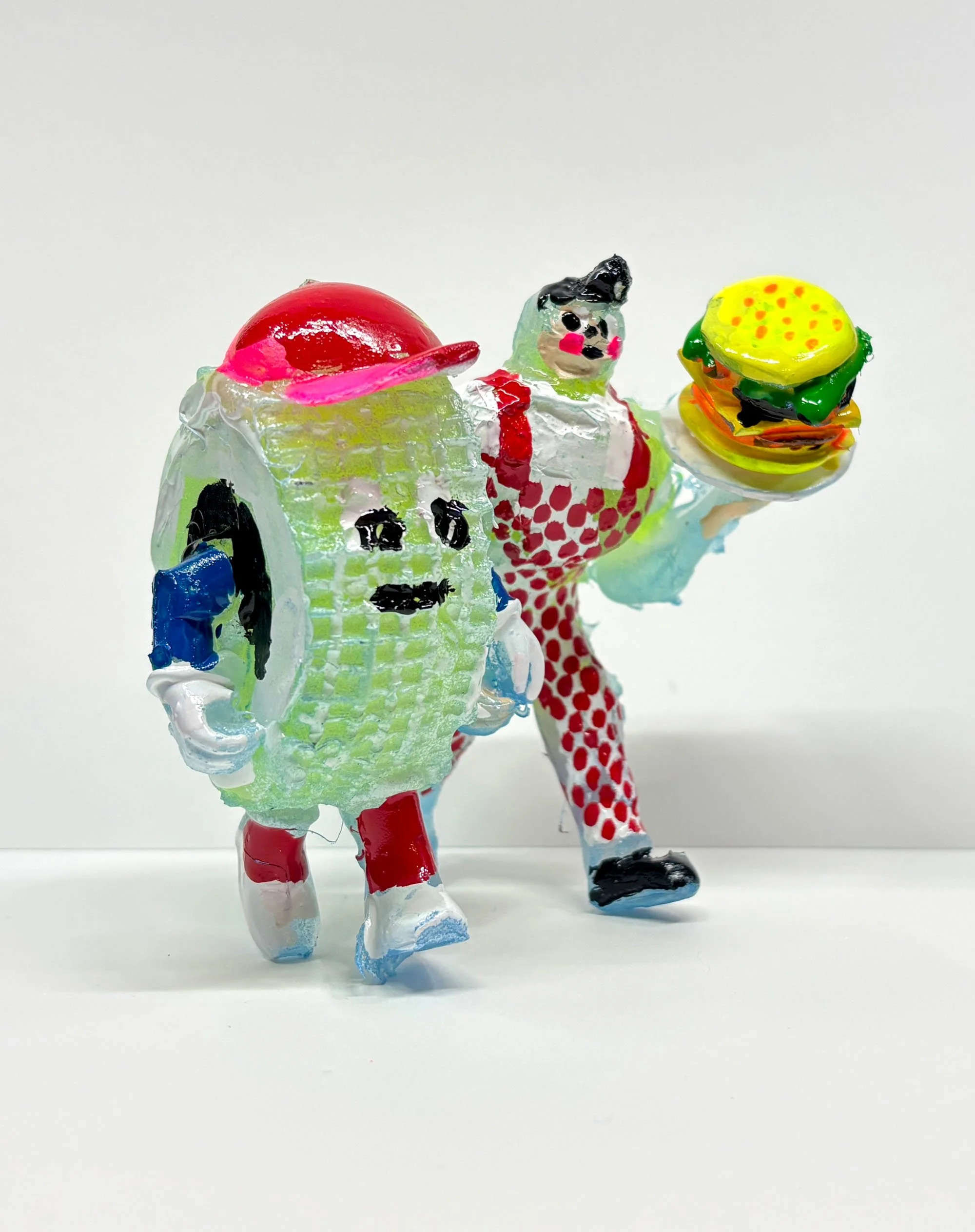
“My sculptural work draws on the familiar forms and modest scale of mass-produced, ephemeral junk. Some of these knick-knacks, toys, and figurines have gained value over time through scarcity, oddity, or cultural reference, while much of it already exists at — or very close to — the threshold of the town dump. Inspired by these objects, I create sculptures using hot glue castings and fragments that I can replicate, cut, paint, and reassemble freely. The hot glue’s malleable, translucent quality allows me to manipulate it into new collectables — objects that might sit just as comfortably on a kitchen windowsill as in an art gallery”.
Your characters evoke ambiguity, fragmentation, and a sense of controlled chaos. What do they represent for you conceptually and narratively?
There is often something both unsettling and humorous in the lack of clarity present in some of my figurative sculptures. That strange visual tension really appeals to me, and I enjoy finding new ways to create and manipulate it as an idea develops.
Your work sits at the intersection of comics, storytelling, and digital culture. How would you define your practice today, halfway between painting, illustration, and sculpture?
I often describe my work as painting just as much as sculpture. While developing the form and shape of a piece, I’m simultaneously thinking about brushwork, layers of paint, and surface color patterns.
Your sculptures seem to carry a sense of liminality and metamorphosis. Is transformation a fantasy you seek to materialize through form?
Absolutely. Much of my work is explicitly concerned with time, and time inherently implies transformation. Last year, I created a series titled Metamorphosis: Final Stage, depicting figures molting and leaving shells behind. It reflects the process of becoming an adult — a long, final stage of life marked by many shifts and meanings over time. Some changes are gradual, others sudden; some intentional, others unexpected. Questions like “Who am I?” and “Who will I be?” are always present in my thinking.
How do you move from drawing or flat images to sculptural objects? What does volume allow that a flat image cannot?
Because I think of these sculptures as paintings, I enjoy how the compositions exist without a frame. I’m also interested in playing with the illusion of space. Techniques like scale or atmospheric perspective can suggest depth or flatten space in a two-dimensional image, but here they coexist within the real three-dimensional space of the sculpture. As you move around the piece, things begin to shift and feel slightly strange — similar to how Impressionist painters played with the push and pull of space on a flat surface.
Do you see your practice as documenting the present, speculative fiction, or a critique of contemporary culture?
For me, it’s mostly about building my own world of characters and creating a kind of poetry from what’s in my head and what I observe in the world around me.
Aaron Nemec
Aaron Nemec (USA) was born in Ohio and raised in Michigan. He earned a BFA in Painting and Drawing from the University of Michigan (2001) and an MFA in Electronic and Time-Based Art from Purdue University (2011).
Nemec works across sculpture, painting, drawing, performance, audio, and video, and his projects have been shown both nationally and internationally. Recent exhibitions include:
Little Lightning Gallery, Brooklyn, NY
mtn space, Lake Worth Beach, FL
Pamplemousse Gallery, Richmond, VA
Hey There Projects, Joshua Tree, CA
Smoke the Moon, Santa Fe, NM
Riso Club, Leipzig, Germany
The Drey, Toronto, Canada
He currently lives and works near the northern shores of Lake Michigan.